The Top 10% Effect: Why Movie Stars Are Aging More Slowly

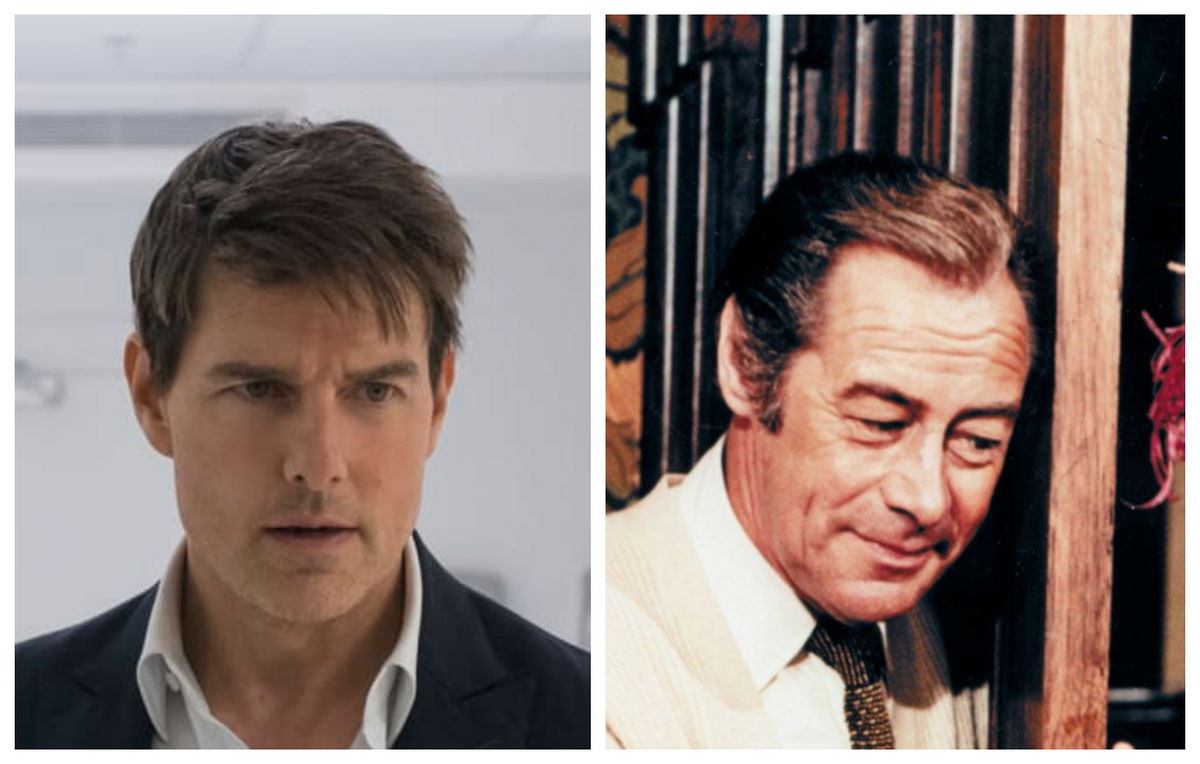
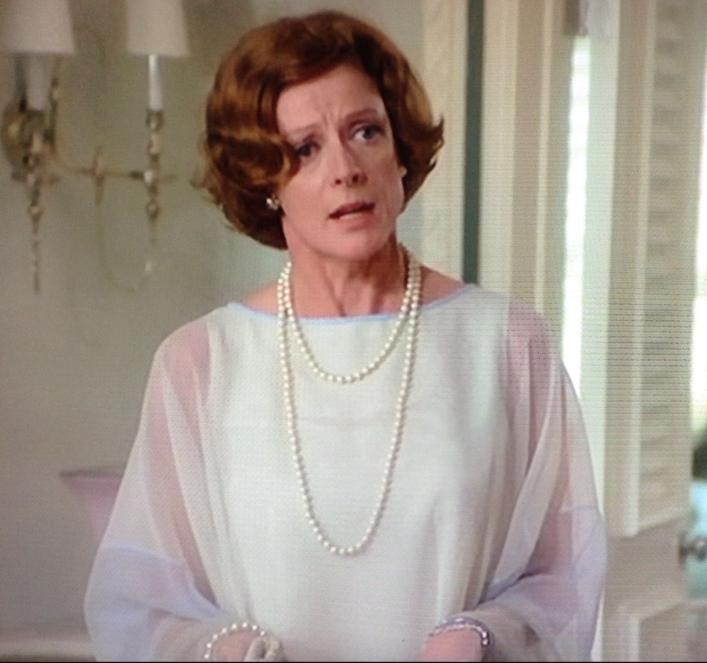
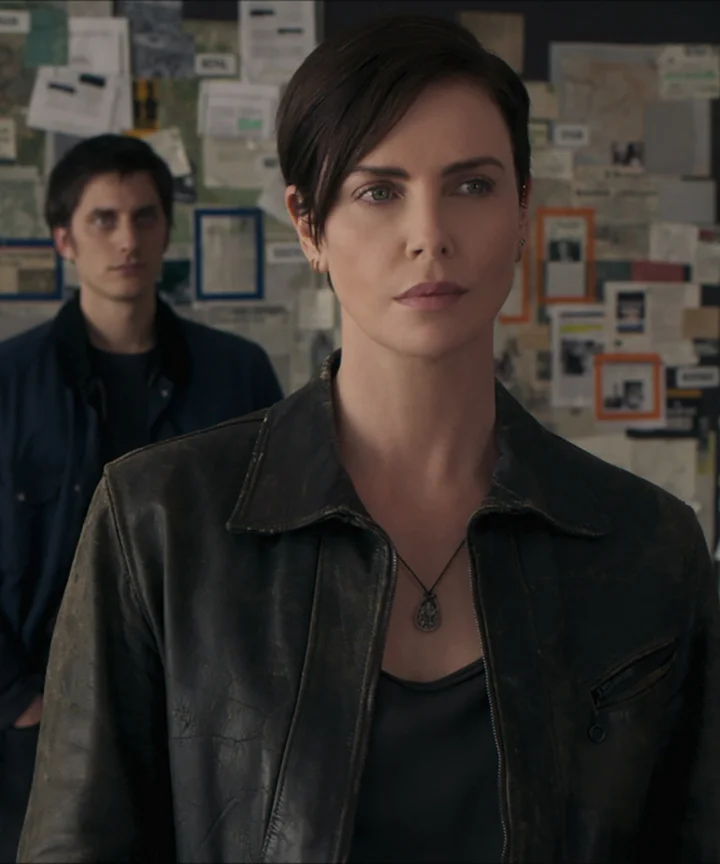
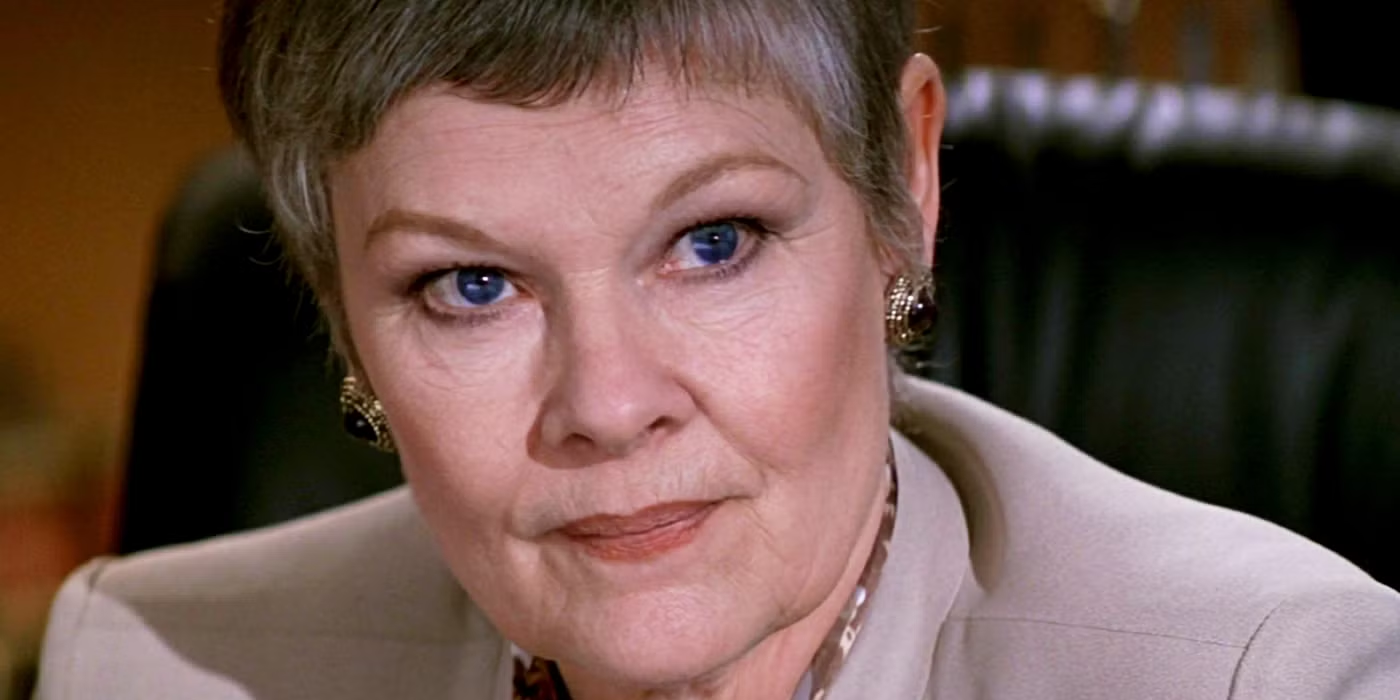
I’m going to show you some pictures of famous actors and ask you to tell me what each pair has in common. Pretend you didn't just read the title. Ready? Go.
Pair 1
Pair 2

And for some men:
Pair 3
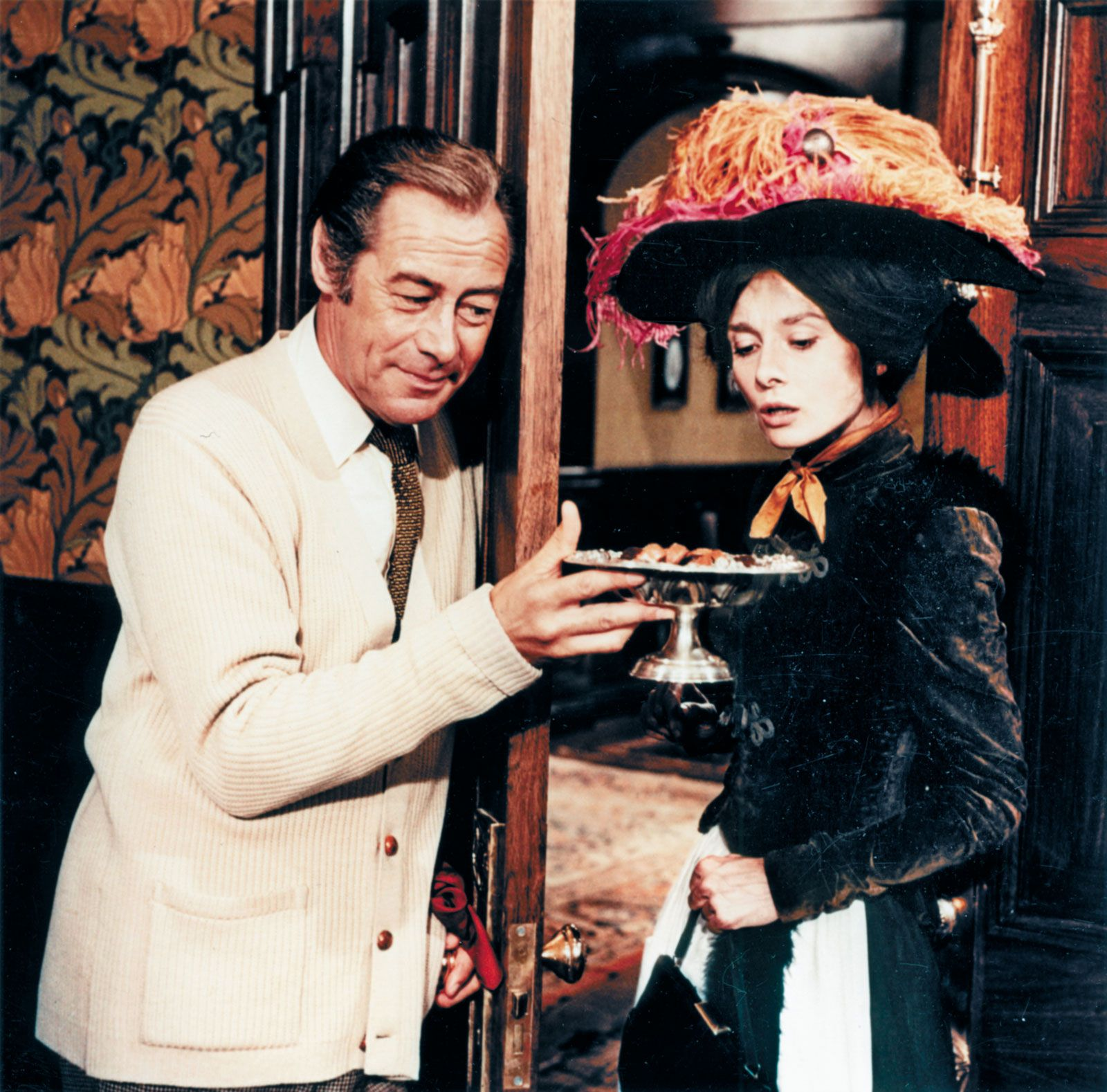
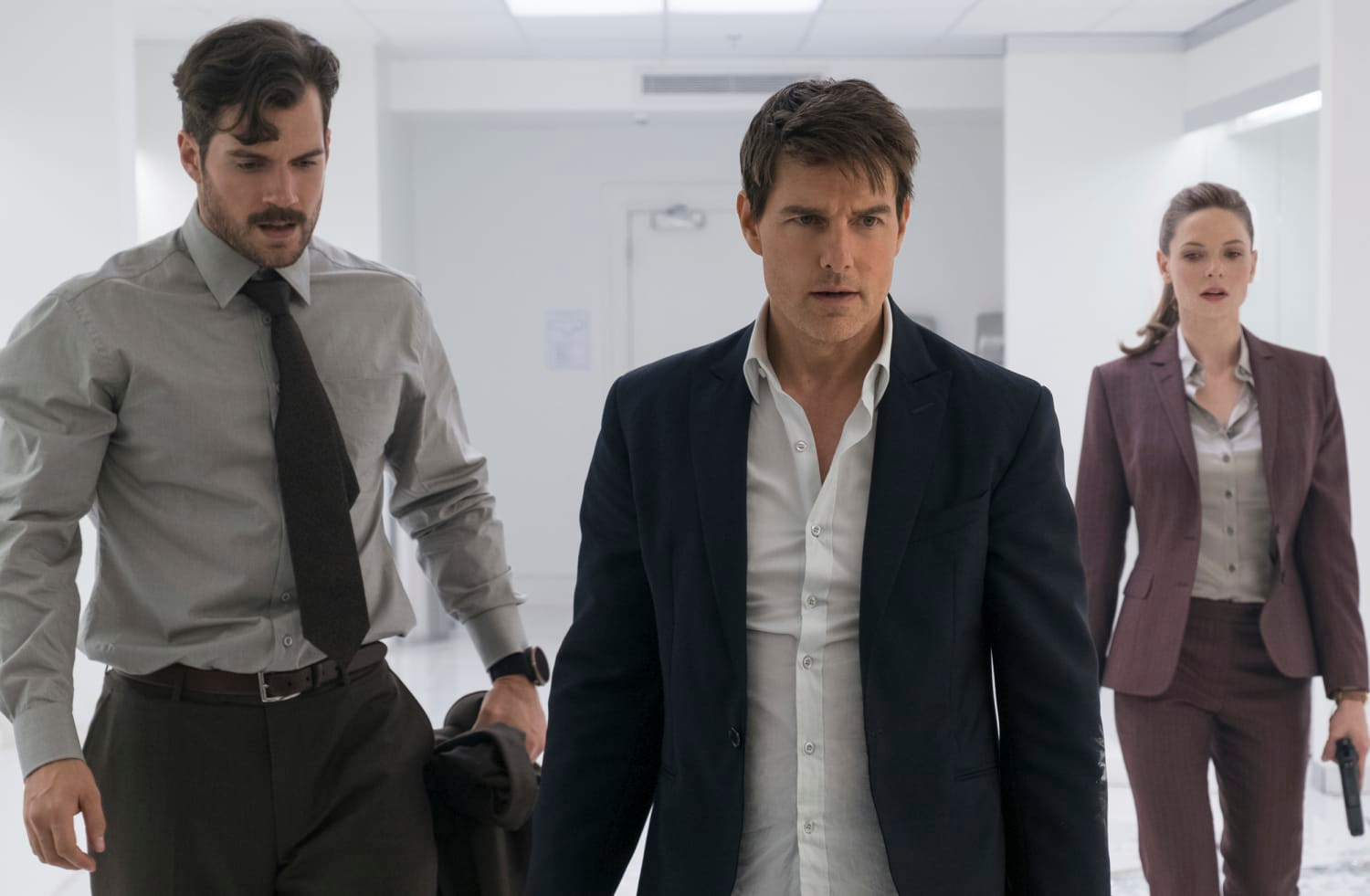
Each pair of actors was the exact same chronological age when these these movies or shows came out1. Rex Harrison was 56 years old when My Fair Lady arrived, or the exact same chronological age as Tom Cruise was in Mission: Impossible – Fallout, yet they look worlds apart in apparent age. (I’d wager Rex couldn’t run like this at age 56 either.)
These are not just cherry-picked examples. Here’s Robert Downey Jr. at 48.

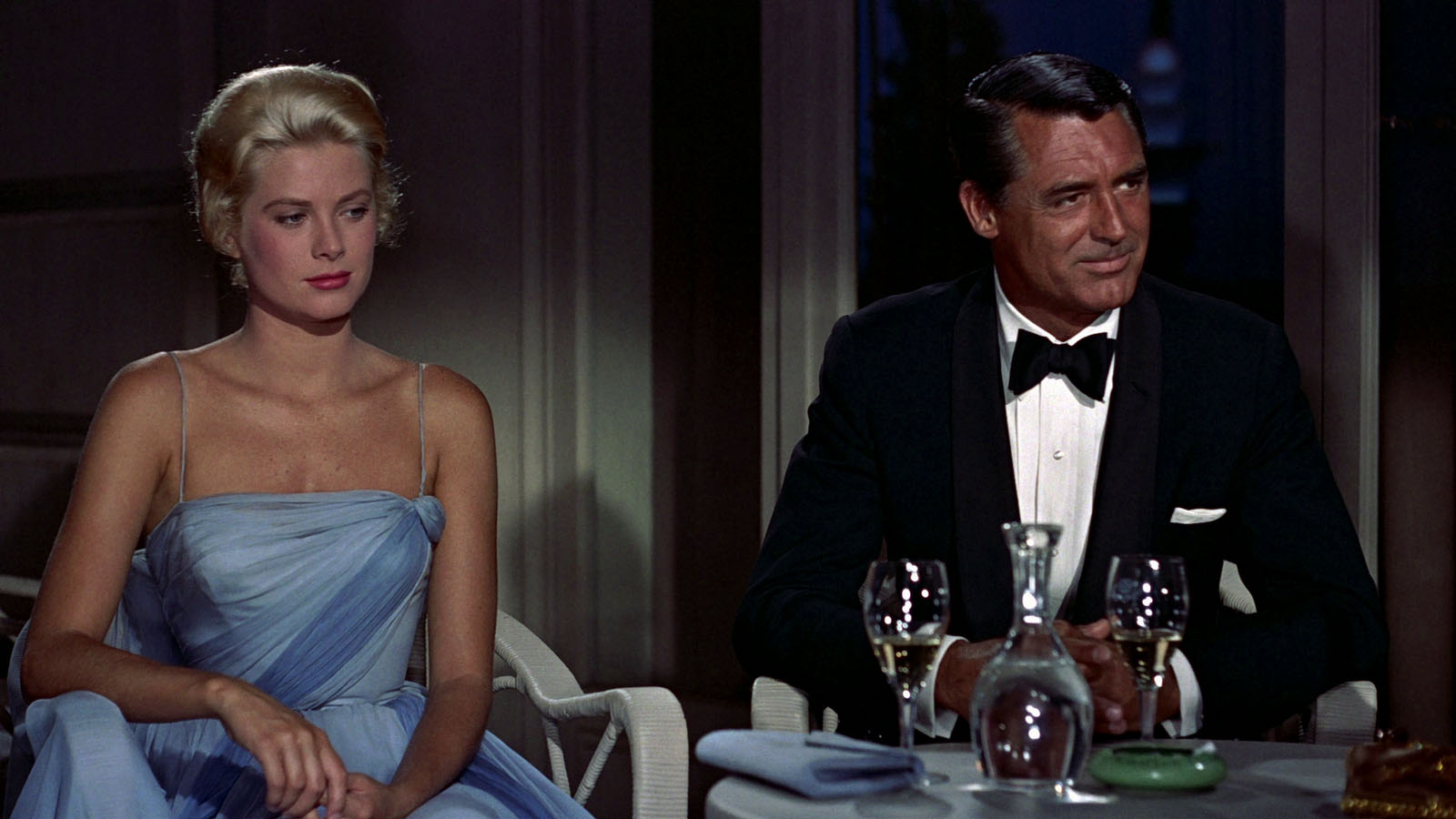
Here’s Cary Grant at 51–a mere three years older.
And these aren’t even some of the most egregious examples. Take famously young-looking Paul Rudd at 46:
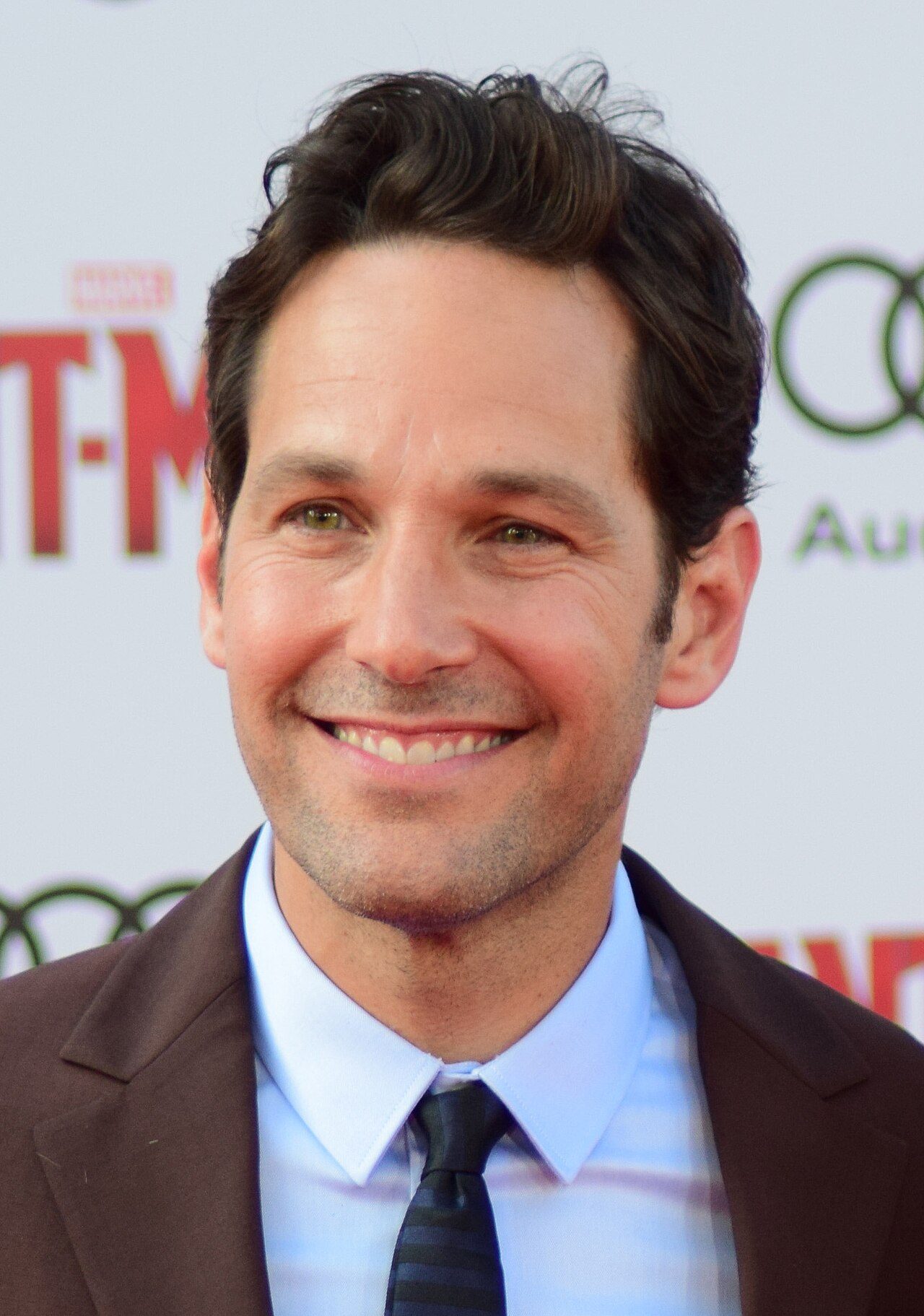
... and compare him with Robert Redford and Wilford Brimley–both around (not exactly) the same age.
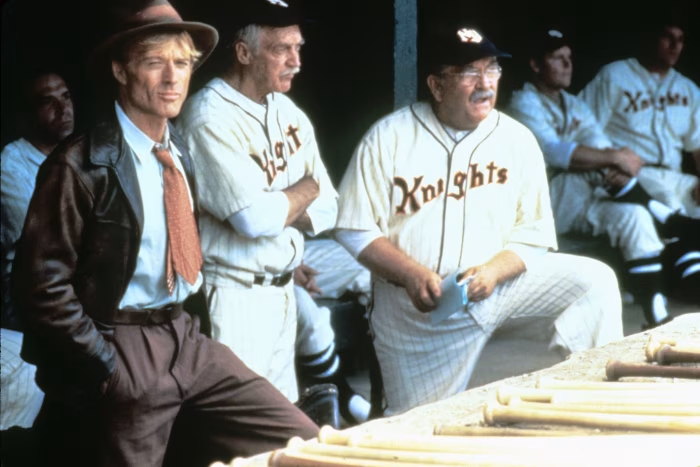
Redford looks great, of course–after all, he’s Robert Redford–but he looks a good bit older than Rudd. And Mr. Brimley, pictured above at age 50, starred in Cocoon–a movie specifically about reclaiming lost youth–just a year after The Natural came out (from which this still was taken).
Many people have documented the anti-aging effect before now--but usually only anecdotally. It's easy to cherry pick stills from movies that both support the idea and run against it, and humans aren't that great at estimating peoples' ages to begin with, so I was always a little skeptical that movie stars are actually looking younger. But I happened to have an age estimation algorithm, the same one that I used in a previous post to examine how Hollywood mistreats aging female movie stars. To recap: that model has been trained on real peoples' known ages to guess based on their face how old they are, and it is accurate to within about 7 years, on average. So I ran the model on a wide spectrum of (randomly selected) actors and movies from the 1950s to the present.
And sure enough, people have been looking younger and younger as the decades go on, starting in around 1970.
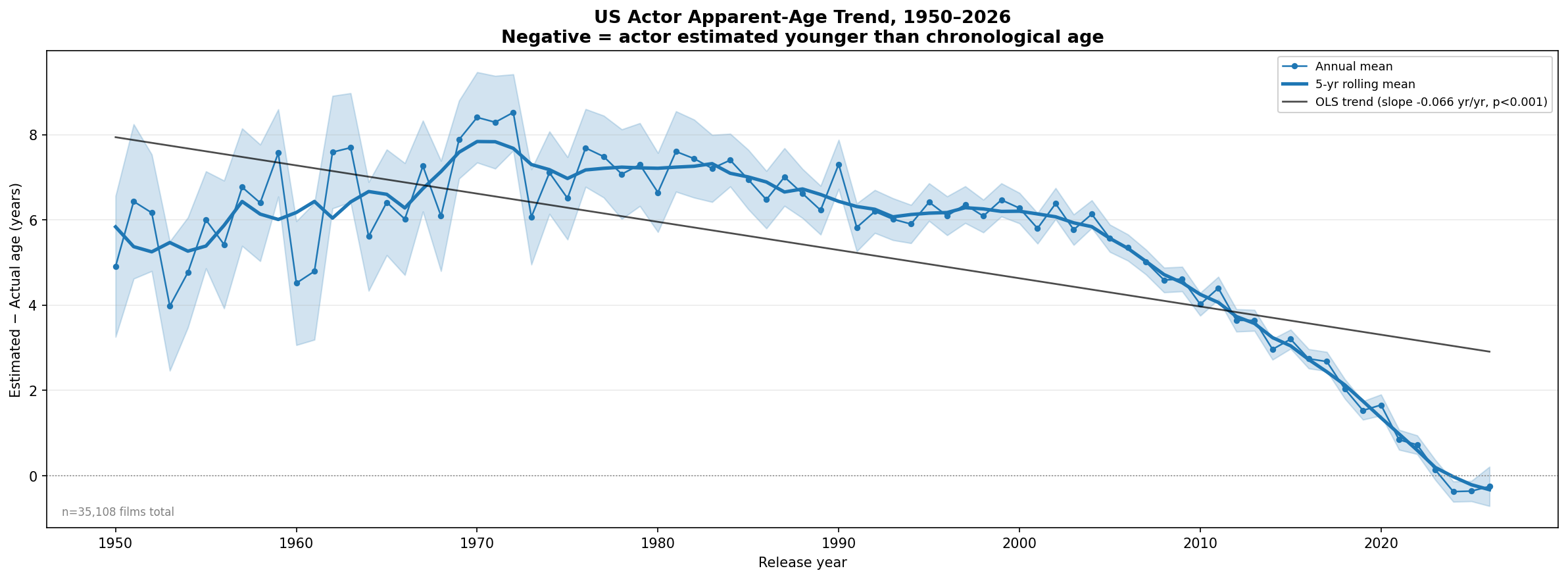
The timing of the decrease doesn’t match up with the rise of plastic surgery (the 50s) or Botox (the 90s); it partially aligns with the explosion in cosmetic procedures of the last 15ish years, but about half of the downward trend had already occurred by 2010. No, this neat decrease in apparent age goes back much further, and progresses much more smoothly, than you would expect if it was a one-time drop driven by a new kind of cosmetic procedure.
There is something obvious to the idea that movie stars are looking younger. Life expectancy has increased since the early days of cinema and cosmetic surgery has advanced. Most people watching classic movies come to the same conclusion as I’ve just laid out–people used to look a lot older at the same chronological age. A 60-year-old way back then might look like a 50-year-old now.
But I think there’s value in demonstrating this trend holds quantitatively, not just by vibes and impressions alone. More importantly, diving down into the existence of the anti-aging effect allows us to ask why this is happening. We won’t get an answer in this research (yet), but we will get a clue.
Many have advanced hypotheses to explain the anti-aging effect. Some have suggested camera filters, others sunscreen usage, or less smoking2. Other research focuses on individual differences in apparent aging, but given the widespread nature of the anti-aging effect, which seems to apply to most actors and not just a handful of Paul Rudd-like outliers, I doubt that individual factors are driving the Youthening.
If it truly applies to everyone, though, we can’t easily figure out why it’s happening–it could be anything that is increasing systematically over the last 60 years. Fortunately for our purposes, the anti-aging effect doesn’t hold globally. I gathered data from 20 different countries and regions with active movie industries, from Hong Kong to Egypt to Poland, and focusing on the period from 1990-20203.
Most of them show the same downward trend, towards younger and younger-looking on-screen talent. We see the same decline in apparent age across much of the world, from China to Sri Lanka to Turkey to Argentina.
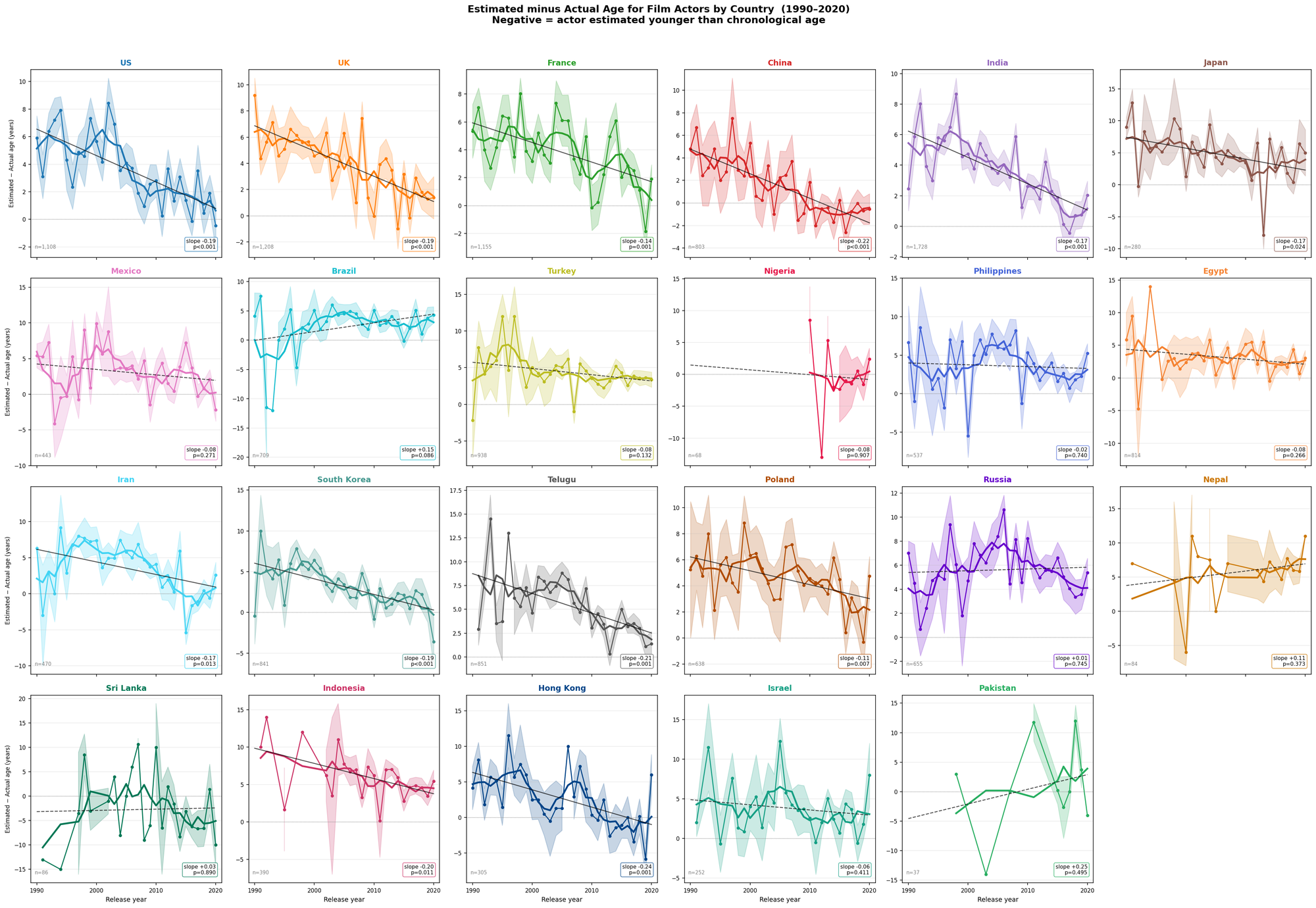
But as the above chart shows, not every country had this same shift. A few that didn’t include Russia, Brazil, and Nepal. That presents a mystery: Why did some countries have this dramatic trend towards on-screen youth while others stayed looking relatively older? My first thought was that there was a systematic bias in the age estimation algorithm, but that’s not supported in the data. Countries with the aging anti-pattern (i.e. staying the same apparent age or even looking older) come from all over the globe, including a sampling of predominantly Latinx, Asian, African and European regions.
Another explanation advanced earlier was sunscreen usage. But a further consequence of the wide geographic distribution is that countries that receive both lots of sun (Mexico, Brazil) and less sun (Russia) show opposite trajectories from other countries with similar levels of sun. Indonesia, which lies directly on the equator, shows a robust anti-aging effect, while Brazil, also traversed by the equator, does not. The bulk of Russia's population lives at similar latitudes to much of the United Kingdom's population, despite showing opposite apparent age effects.
I spent a good long time hunting down possible explanations. I thought perhaps it was related to pollution, which has a known and significant effect on health, or the burden of communicable disease. My thinking was that healthier people–those less affected by infections and exposed to less airborne pollutants–would look younger. But neither of these explained the trend either.
I got a clue when I looked at a sample of two dozen WHO-tracked causes of death and discovered that the most significant correlation between different types of disease and the aging effect was actually for musculoskeletal diseases like gout–which is best-known for primarily affecting the rich. Other diseases, including many that are more prevalent in old age, showed little or no correlation.
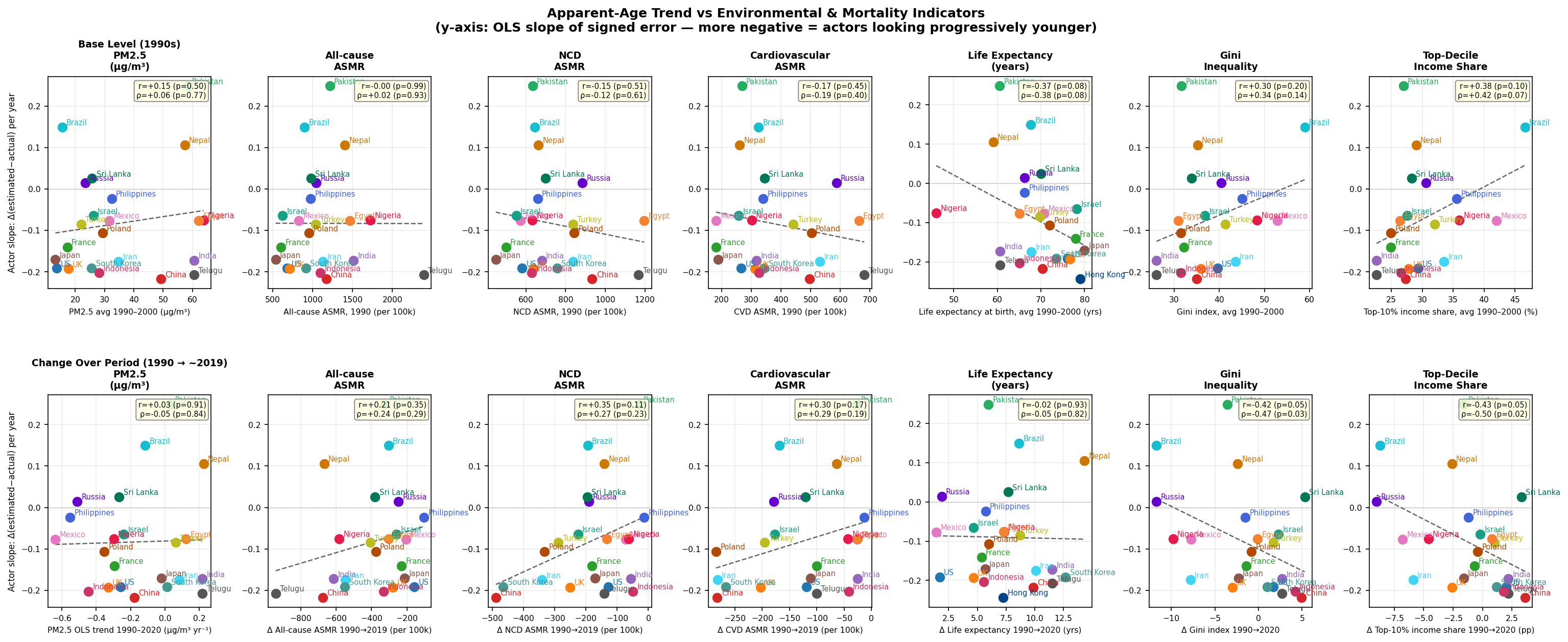
I dug a little deeper and found that, indeed, the best predictor (I can find) of whether a country’s movie stars will look younger is none other than how much wealth the richest 10 percent of that country hold (the rightmost top and bottom panels in the above chart). (Gini Inequality, or how unbalanced a country's income is, comes out at a close second.) So the more loaded the richest 10th of the country is, and the greater that inequality has become since 1990, the more that country's movie stars will look younger.
Let’s take a step back and try to figure out why that might be. It’s obviously not the case that dollars and cents in your bank account causes your skin cells to degrade more slowly. Rather, I suspect it has to do with the caliber of medical care available to the residents of each country, and especially, the caliber of medical care available to the highest earning 10 percent of residents of each country.
The United States, for example, ranks poorly by some metrics of average care quality, because many poor people and people of color receive woefully inadequate care (and sometimes none at all). But the health care available to the wealthiest people in the United States is some of the best in the world. Similar patterns apply to many other countries on the list that show the greatest decreases in apparent age. Movie stars tend to be, by and large, well-paid and able to afford the best available medical help–even when it isn’t in the country they inhabit. So my working hypothesis to explain why movie stars are younger is that the quality of the very best available cosmetic/medical4 care is what matters and that doesn't come cheap. When the highest-earning 10 percent can afford the best doctors in the world, they'll look younger and healthier than people in previous generations did.
For the rest of us? Well, there's always back-alley botox.
- The first two are (in order):-Maggie Smith in 1979’s California Suite, and Charlize Theron in the 2020 action flick The Old Guard. Next up are: Nicole Kidman in the new TV show Scarpetta and Judi Dench in 1995 James Bond comeback GoldenEye.
- Another, more boring explanation is that the age detection algorithms are biased to be more accurate at guessing the age of modern facial hair, grooming and/or makeup standards. The idea here is that the algorithms are tuned to recognizing, for example, a mustache from the 1970s as being from a man who grew up in the 1970s. Alas, this notion is not supported in the data. Focusing specifically on period piece movies set at specific times, like World War 2 or Victorian England, shows the same overall trend over time. In other words, actors in WW2 movies in the 1970s look much older than actors in WW2 movies in the 1990s who look older than the same actors, with similar period-correct hair and makeup, do in the 2010s.
- I included a few regions as well as nations: specifically Hong Kong and "Tollywood" or Telugu cinema, which are films in a particular language (Telugu) in India. I focused on the 1990-2020 period because most of the health data that I could find (much of it collected by the WHO) was only filled in from 1990-present. Furthermore, a lot of the individual countries only began to develop their homegrown cinema empires from 1990-2000, so I would have lost a lot of sample size going earlier.
- I'm grouping cosmetic surgery and similar procedures together here when I talk about medical care. I don't doubt that a significant factor is the quality of the surgeons and doctors who perform these procedures and the types of equipment/chemicals/procedures they have access to.